
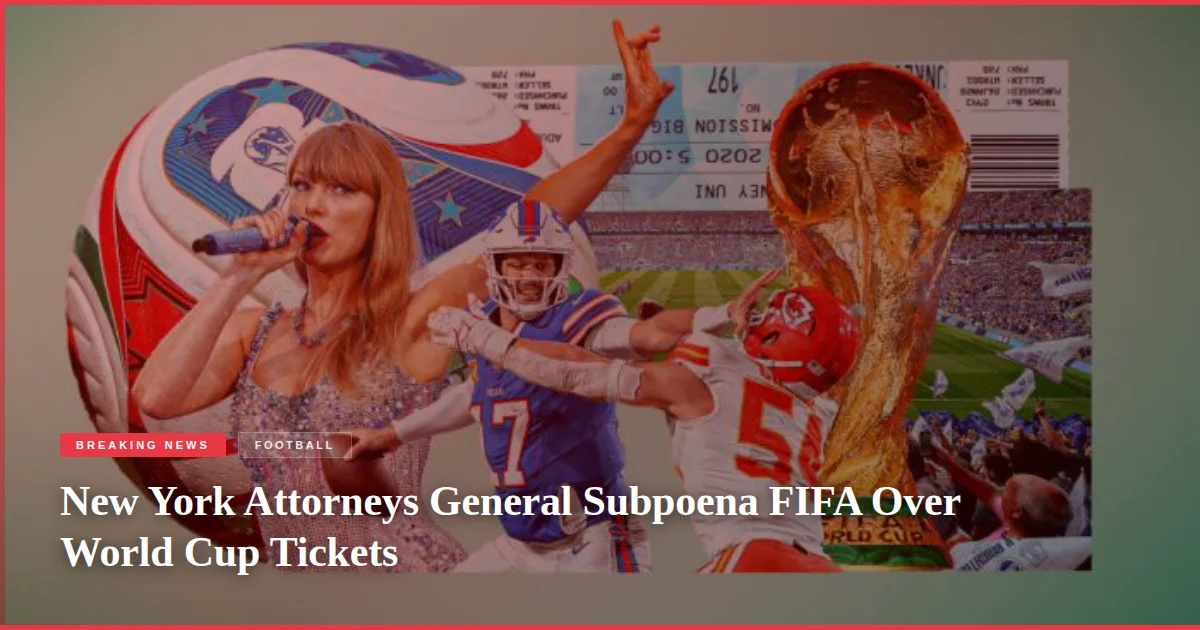
FIFA’s World Cup ticketing strategy has come under fire, leading to legal action in the United States. The attorneys general of New York and New Jersey have subpoenaed FIFA to get information about their World Cup ticketing practices.
Unsold Tickets and Pricing Strategy
Despite FIFA’s claim of over 500 million ticket requests for the World Cup, many tickets remain available. The United States Men’s National Team will play its World Cup opener on June 12, and there are thousands of tickets for the game still available for sale direct from FIFA.
This situation has sparked criticism from fans who believe the ticket prices are too high. According to Keith Pagello, founder of TicketData, FIFA aims to sell the maximum amount of tickets for the maximum amount of money.
FIFA president Gianni Infantino and his organisation see unsold tickets as a deliberate part of their strategy to extract as much revenue as possible from fans.
Echoes of US Ticketing Trends
Ticketing experts suggest that FIFA’s approach mirrors a growing trend in major U.S. sports and big concert tours. This model involves high initial prices, a gradual release of tickets, and a secondary market for hospitality packages.
Dave Wakeman, a ticketing consultant, argues that the sports industry views fans primarily in terms of their willingness to pay. He also pointed to the adoption of legal sports gambling in the U.S. and resulting pervasive advertising as further evidence that the sports industry has “contempt” for its audience.
Wakeman believes FIFA’s actions reflect this attitude. “You don’t care if they’re abused. You don’t care if they’re just destroyed. You just care about extracting as much value as you can before they’re a broken husk and they’re thrown over to the side,” he said. “That’s what FIFA is doing.”
The Rise of ‘Slow Ticketing’
The practice of “slow ticketing”—releasing tickets gradually instead of all at once—has gained traction over the past decade. It initially became popular for major concerts and has since spread to high-profile sporting events.
What’s changing now, is the pricing. Rightsholders are more willing to push the envelope on pricing at the outset, with listings often deliberately opening higher than they know the market will support. It helps ensure that the artist, organizer or team captures the value that used to be harvested by brokers buying tickets at face value, then flipping them for profit on the secon
The attorneys general of New York and New Jersey are now seeking more information about FIFA’s ticketing practices, indicating growing scrutiny of the organisation’s approach to the World Cup.