
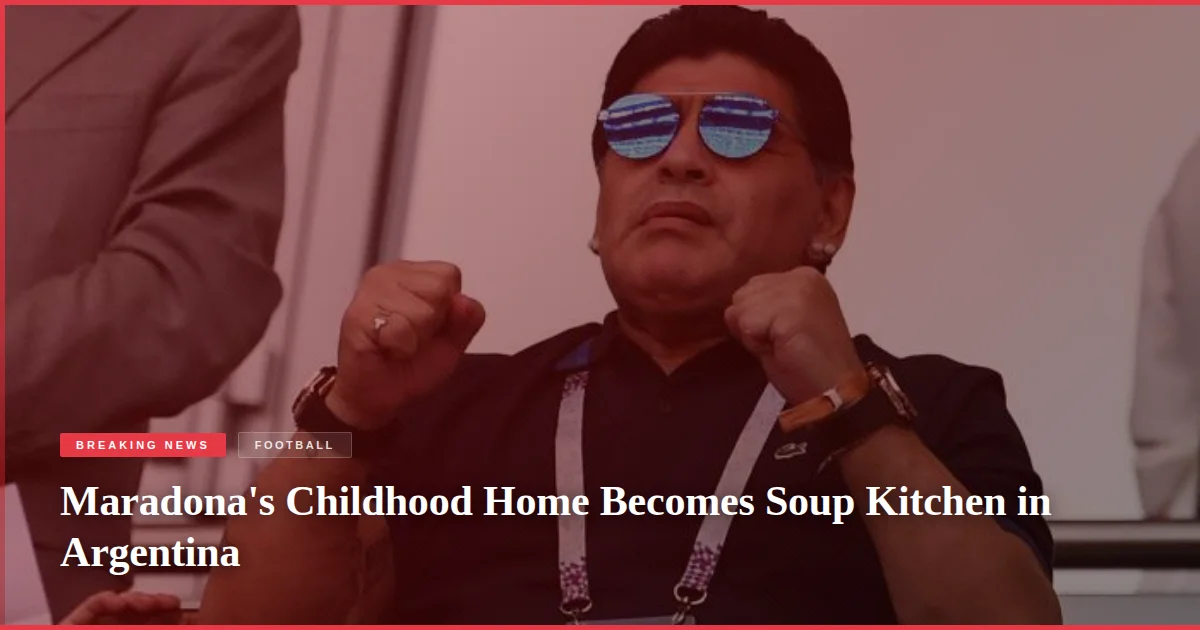
The childhood home of Diego Maradona has undergone a transformation after the legend’s death.
Located in the Villa Fiorito neighbourhood, the property is now being used as a soup kitchen to provide essential support to locals facing economic hardship.
A Site of Cultural Significance Serves the Community
The former home of Maradona in Villa Fiorito, a poor neighbourhood on the outskirts of Buenos Aires, is being used to help those in need of food.
While the property no longer belongs to the family of the one-time World Cup winner, it remains a site of immense cultural significance. A mural is still seen on the facade, depicting Maradona alongside the words “The House of God,” and the home was declared a national historic site in 2021.
The current owner lent the dirt yard to a group of volunteers to set up a soup kitchen, ensuring the location continues to serve the people of the community where the legendary forward first honed his skills.
Economic Hardship Drives Increased Demand
Money issues across Argentina have resulted in locals flocking to the site for meals as the country grapples with a difficult economic climate.
The makeshift kitchen has become a lifeline for many who once cheered for the boy who left these very streets to conquer the footballing world.
Leonardo Fabian Alvarez, a pastor who runs the makeshift soup kitchen, told Reuters: “We have increased food requests by about 300 per cent. People have obviously lost their jobs and come to the line in shame, collecting food and whatever we give them. This is something that never happened to us before.”
Maradona’s Enduring Legacy
The Argentina legend passed away at the age of 60 in November 2020, but his legacy in his home town remains as strong as ever through this new charitable initiative.
Maradona’s career included unprecedented highs and well-documented struggles. He battled drug addiction and health problems prior to dying from a heart attack, but his impact on the pitch remains the gold standard for many.
During his trophy-laden career, he led Argentina to glory at the 1986 World Cup in Mexico.
His influence extended far beyond his playing days and into his time in the dugout. Maradona was at the helm as Argentina reached the World Cup quarter-finals in 2010.
While his childhood home serves the local community in Buenos Aires, other former clubs have found their own ways to immortalise the icon. Napoli renamed their ground in his honour. The stadium is now known as the Diego Armando Maradona Stadium.