
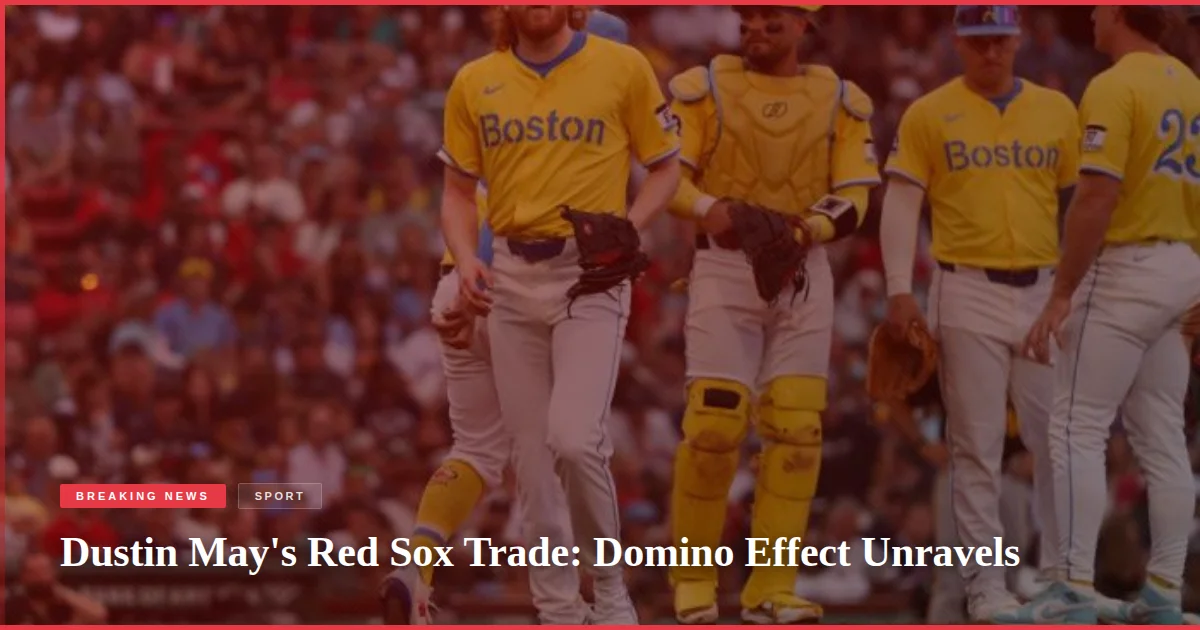
The Rafael Devers trade continues to ripple through baseball, with former Red Sox pitcher Dustin May now taking the mound for the St. Louis Cardinals against his old club. This has prompted reflection on the consequences of the Devers trade.
The Devers Trade Tree: A Mixed Bag
The Red Sox initially acquired pitchers Kyle Harrison and Jordan Hicks, outfielder prospect James Tibbs III, and pitching prospect Jose Bello in the deal. Currently, only Bello, a 35 FV prospect in A-ball, remains with the Red Sox.
Harrison was later traded to Milwaukee as part of the Caleb Durbin deal. He has started the season strongly, going 1-0 with a 2.61 ERA and 14 strikeouts in 10 1/3 innings. A Brewers reporter noted that Harrison has found a new pitch after a grip suggestion from a former Giants teammate, something the Red Sox couldn’t unlock.
Tibbs Traded for May, Hicks Struggles
James Tibbs III played 30 games at Portland before being traded to the Dodgers for Dustin May, who made five subpar starts. Tibbs had a .900 OPS in Double-A last year. He is now performing well in Triple-A with seven home runs in twelve games, resulting in a 1.376 OPS and a 252 wRC+.
Jordan Hicks struggled with Boston, posting an 8.20 ERA in 21 games. He was traded to the White Sox this winter, with the Red Sox needing to include prospect David Sandlin to facilitate the move. Boston is still paying $4M of Hicks’ salary this year and next. Hicks has continued to struggle with Chicago, recording a 7.94 ERA and a negative-11.1 K-BB% in six appearances.
Assessing the Fallout
The long-term effects of the Rafael Devers trade are still being felt. The performances of Harrison, Tibbs, and Hicks since leaving the Red Sox have sparked debate about the wisdom of the initial trade and subsequent moves.