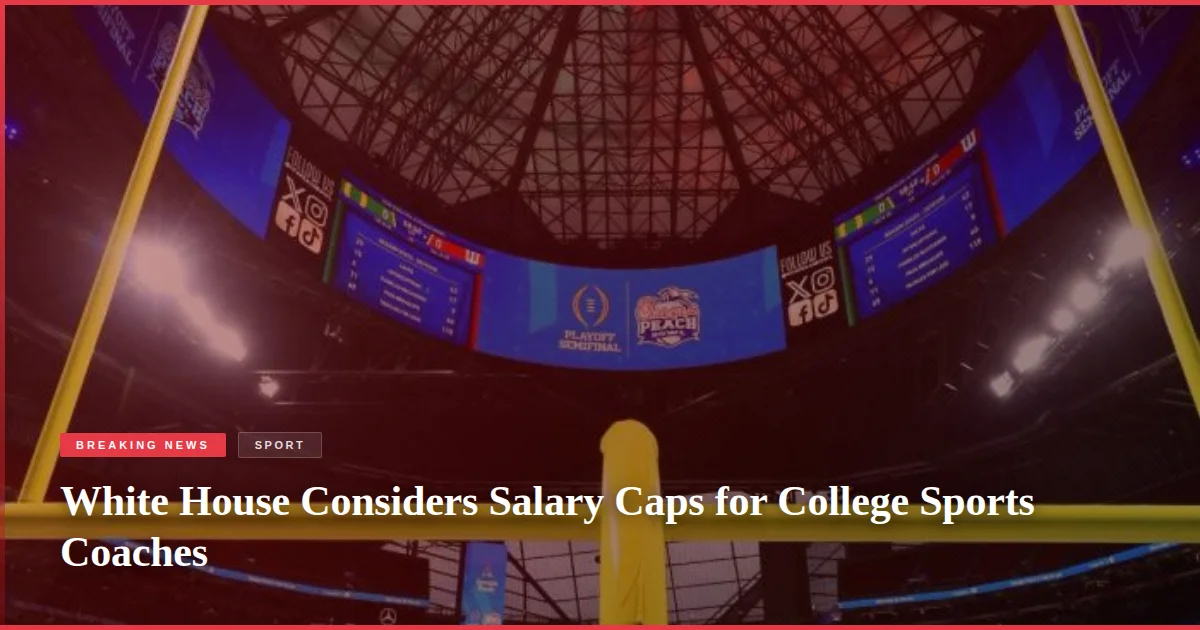
The White House committee focused on college sports reform is considering capping coaches’ salaries. They are also discussing creating a Group of Six playoff. Shielding the NCAA from antitrust litigation is also on the table. This represents potentially the most ambitious federal government intervention into college sports ever.
Key Proposals for College Sports Reform
The preliminary recommendations have been reviewed. These were circulated this week within President Donald Trump’s College Sports Reform Committee. The committee has marked the draft for “discussion purposes only”. It is actively seeking input from industry participants and athletes before moving toward formal policy.
The committee proposes a new entity to oversee a plan. This plan should be implemented in three phases. A new College Sports Reform Task Force would be established within the existing NCAA structure. It would be armed with limited antitrust exemptions and the authority to override state laws.
The task force would operate for two years. Any rules it sets during that period would carry permanent antitrust protection. This means they would remain in effect even after the body dissolves, unless a future governing body or Congress changes them.
Congressional Intervention Needed
Congress would also oversee the College Sports Reform Task Force.
However, the ideas require Congressional intervention. The plans all hinge on Congress passing legislation to shield the NCAA and its membership from antitrust lawsuits. The committee is pushing for legislation to be adopted before Congress’s summer recess, “even if such legislation is inconsistent with any recommendations made in this memo.”
The long-gestating SCORE Act is expected to be presented on the House floor the week of May 18, though leaders believe the bill is at least half a dozen votes short of passing the Senate and becoming law.
Three-Phased Approach to Reform
The committee’s document outlined a three-phased approach. The focus is on “decisive near-term action and long-term structural reforms aimed at permanent sustainability.”
The document outlines three phases: stabilization, media rights reform and permanent governance.
Phase 1 is where the most consequential ideas reside.
Salary Caps and NIL Restrictions
The document calls for salary caps for coaches and administrators. This is the most direct intervention into athletic department spending ever proposed at the federal level. It’s aimed at addressing rising costs in college athletics. These costs have led some programmes to cut non-revenue sports and shrink staff sizes in athletic departments. Coaches’ salaries have never been higher.
At least 13 major football coaches are set to be paid at least $10 million next season.
Also outlined in the document is the prohibition on NIL-based salary cap circumvention. This is a growing concern as booster collectives and athletic departments redirect multimedia rights and apparel revenues to supplement the $20.5 million that schools are permitted to share with players under the terms of the House v. NCAA settlement.
The committee also wishes to modify the CFP’s reven
The committee is actively seeking input from industry participants and athletes before moving toward formal policy.