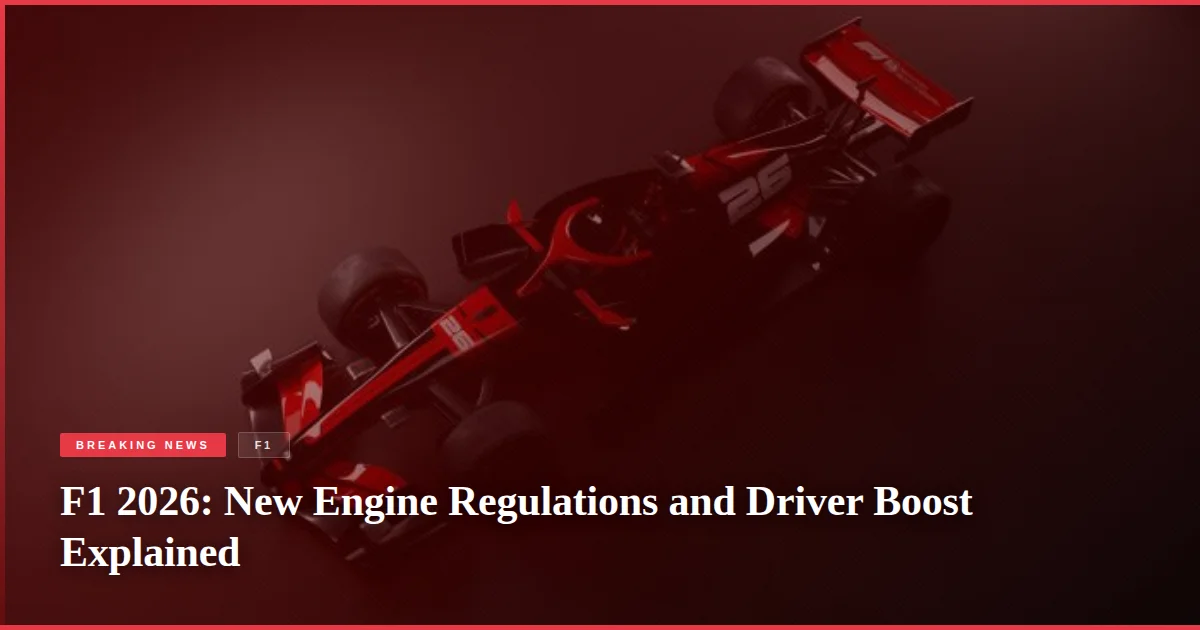
The Formula 1 season is bringing a full reboot of the Championship. New engines, new aerodynamics and different ways of putting together a racing lap are coming.
New Power Unit Regulations for 2026
The big change for 2026 is a new generation of power units. These place more emphasis on the electrical side of the hybrid system.
About half the power used by the car is going to be electrical, and half from internal combustion, with the power unit also using Advanced Sustainable Fuels.
This makes the power units more road relevant, and thus more attractive to existing manufacturers Ferrari and Mercedes, newcomers Red Bull Powertrains in partnership with Ford, General Motors (from 2029) and Audi, plus returning suppliers Honda.
Recharge Mode and Energy Harvesting
There is a finite amount of energy available, so how and when the driver uses it will be an important factor. Charging up the battery, to have energy to use in the first place, is just as important as deploying it.
Recharge is available to a driver for those ‘quieter’ moments on track, when they can afford to tuck away a bit more electrical energy. Under the new regulations, cars will be able to harvest energy to charge the battery when braking, on part throttle, when lifting off or when ‘super clipping’.
Most of the time, the Recharge will be automated and controlled by the car’s ECU. The only Recharge mode the driver will have direct control of will be lift-off regeneration, whereby if the driver lifts off the throttle pedal, they can Recharge. However, doing this will disable the Active Aero devices as well. In contrast, super clipping tops up the battery while still at full throttle and therefore the Active Aero will still be ‘open’.
Boost Button for Attack and Defence
Boost allows a driver to take manual control of the energy deployment if they need to attack or defend from another racer on track. The button triggers a change in power unit power settings, either returning to maximum power or a profile pre-configured by the team as per their personal choice.
That energy can be used all at once or spread across the lap, depending on when the driver feels they have the best chance to attack or where they are most vulnerable.
Traditionally, F1 cars have tended to ov