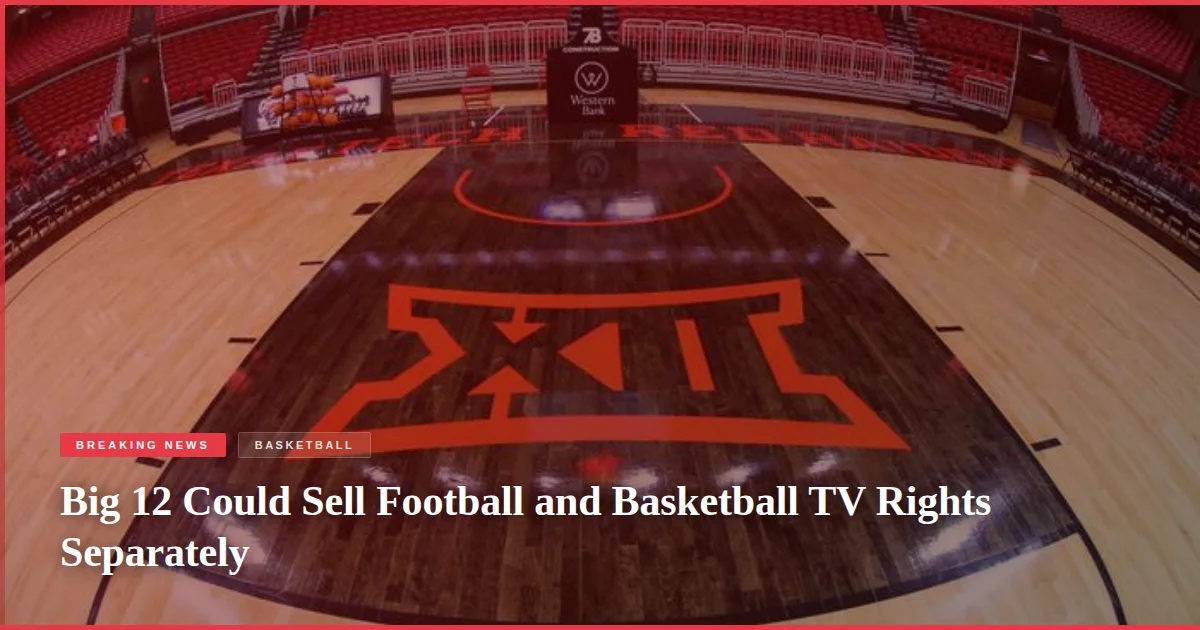
The Big 12 conference is considering a change to the way it sells its broadcast rights. Bundling all sports together has been the standard practice for college conferences. Usually, a deal includes football, basketball, and other sports.
However, that may change. Big 12 commissioner Brett Yormark has “intimated” that the conference will consider selling its football and basketball packages separately when its current deals expire before the 2031 season.
Why Separate Football and Basketball Rights?
Football drives the vast majority of the value for these deals. Industry sources peg the split at about 90% football-driven, with every other sport accounting for about 10% of the value.
College basketball has continued to be a strong viewership driver for networks after football season ends. Some media companies might be better able to utilise the Big 12’s basketball inventory than others, and those media companies aren’t necessarily the same ones that want to buy the Big 12’s football rights. By addressing this market inefficiency, the Big 12 could eke out a bit more value from its inventory.
There are already some indications that college basketball is an undervalued property.
The Big East’s Standalone Basketball Deal
The Big East, which does not participate in D-I football, is earning $80 million annually from Fox, NBC, and Warner Bros. Discovery for its basketball rights. Using the 90/10 heuristic, Big East basketball is being valued at more than double the ACC and Big 12 rates.
The Big East is a great basketball conference, but are its basketball games worth double what ACC and Big 12 games are currently valued at? Are they worth more than the SEC? The answer is probably not, which is exactly why Yormark thinks splitting the inventory will generate more revenue.
It seems that networks will pay more for standalone college basketball rights than they will when the same inventory is bundled with football.
Looking Ahead
As conferences continue to look for loose change buried in the couch cushions, splitting football inventory from their other sports could be the next trend in how college media rights deals are formulated.