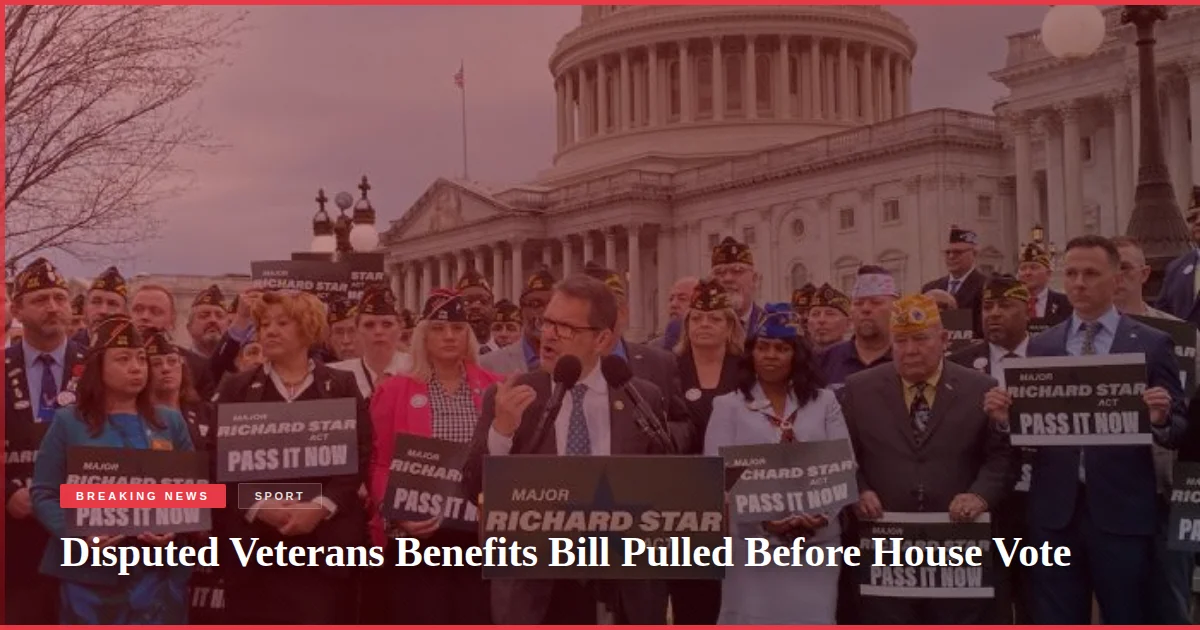
A contentious veterans benefits bill faced an unexpected halt before a scheduled House vote on Thursday. The legislation was pulled from consideration after a narrow rejection of a move to send it back to committee for reconsideration. House Speaker Mike Johnson subsequently indicated that the bill would likely not be raised again for several weeks.
The decision to postpone the vote followed a period of intense discussion on the House floor, where more than an hour of heated debate took place regarding the Take Care of America’s Veterans Act. It was during these proceedings that Rep. Chris DeLuzio, a Democratic representative from Pennsylvania, formally put forward a motion. His proposal sought to return the bill to the House Veterans Affairs Committee for a more comprehensive review.
The procedural vote on Rep. DeLuzio’s proposal was initially scheduled to precede a final vote on the overarching legislation. This particular bill has been a source of division, both among various veterans groups and within the legislative chamber itself. Ultimately, the effort to send the bill back to committee for further examination was rejected by a very tight margin, with the vote tally standing at 210 in favour and 211 against.
A significant moment occurred when Rep. Victoria Spartz, a Republican from Indiana, changed her vote at the last minute; she was one of four Republicans who had initially supported the move to reconsider. Despite the narrow rejection of Rep. DeLuzio’s motion, House leadership made a decisive choice: they decided against proceeding with the final vote on the bill as had been planned, opting instead to entirely pull the legislative measure from the floor.
Speaker Cites ‘Misinformation’ for Delay
House Speaker Mike Johnson confirmed that a decision on the measure would now be delayed for several weeks. Punchbowl News reported that Johnson attributed his reasons for holding the vote to “misinformation” surrounding the bill, which he cited as a key factor in the postponement.
Addressing reporters, Johnson commented on the ongoing situation with direct remarks. He stated, “Our Veterans Affairs Committee has done a great job engaging with veterans … There still remains, though, a lot of misinformation out there, so instead of putting the bill on the floor this afternoon, we’re gonna delay it just a bit.”
Johnson further elaborated on the expected timeline for reconsideration of the legislation. He suggested, “We’re gonna have several more weeks ahead of us before we get back here in September would be my guess when we process all this again.” This statement clearly indicates a substantial pause before the Take Care of America’s Veterans Act is brought forward once more for legislative action.
Divisive Funding Proposal at Core of Debate
The legislation in question, officially known as the Take Care of America’s Veterans Act, H.R. 9237, is a comprehensive package encompassing more than 60 individual pieces of legislation. Many of these components enjoy widespread backing among veterans and their advocates, reflecting broad consensus on several fronts.
Among the widely supported measures included within the bill is the Major Richard Star Act. This act would ensure that retired, combat-injured veterans receive their full Veterans Affairs disability compensation alongside their military retirement pay. Another provision with broad approval is the Love Lives On Act, which aims to continue benefits for surviving spouses of the fallen if they remarry before reaching the age of 55.
However, the proposed method for covering the costs of these initiatives has created a significant split within the veterans community and among lawmakers. The plan involves enacting a planned rule that would alter the requirements for disability compensation related to two conditions that commonly affect veterans: sleep apnea and tinnitus, thereby funding the package.
Those who support the bill argue that this specific payment proposal is vital for ensuring the legislation can be made into law. They contend it represents a necessary, albeit difficult, step to achieve highly desired changes and priorities in veterans’ benefits. Conversely, critics of the bill maintain that future benefits for veterans should not be utilised to fund current needs, highlighting a fundamental disagreement over the approach to fiscal responsibility and benefit allocation.
Veterans Groups Divided
The differing views on the bill’s funding mechanism have led to a clear division among veterans organisations. At least 22 veterans organisations have publicly expressed their support for the bill, indicating a significant segment of the community believes it to be the correct path.
During a press conference held on Tuesday, Mario Marquez, who serves as the executive director of government affairs for the American Legion, spoke unequivocally in favour of the proposal. He asserted that the legislation represents the most effective path forward for accomplishing top priorities for veterans, emphasising the need for pragmatic decision-making.
Marquez highlighted the importance of decisive leadership in navigating such complex matters. He stated, “Leadership is about carefully evaluating the facts making difficult decisions and accepting responsibility for those actions and those decisions.” Marquez also added, “Progress only happens when leaders are willing to tackle difficult issues and keep veterans at the center of the conversation,” underlining the commitment required.
Despite this considerable support, other prominent groups have vociferously opposed the bill, signalling a deep rift in opinion. Among these opposing organisations are the VFW and D, indicating a significant split in advocacy efforts across the veterans landscape.
With the vote postponed and Speaker Johnson anticipating a return in September, the Take Care of America’s Veterans Act is now set for further debate and consideration in the coming weeks, as lawmakers and veteran groups continue to navigate its controversial elements.